Football remains one of the few truly global languages. Wherever you go, the game - even if it might look different in style, culture, and context - still connects and interests people in a way few things can.
Krisztián Vadócz is a unique footballer - he’s played at the highest level - with and against some of the biggest players of the 21st century. Past coaches include legends of the game like Lothar Matthäus and Diego Forlán. He’s played 42 times for his country and represented historic clubs on 4 continents.
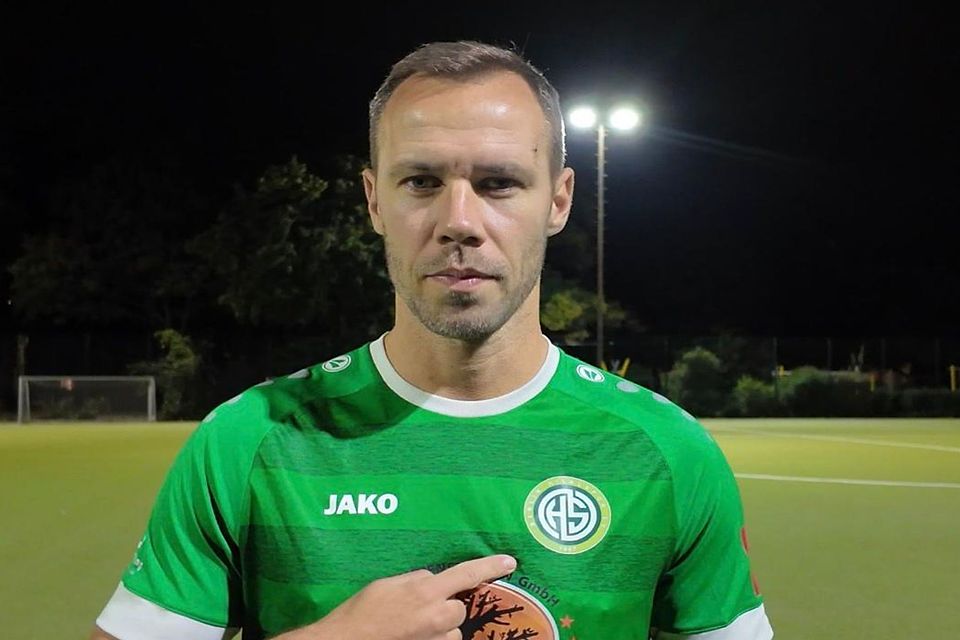
And yet, at 40, and despite his glittering CV, he’s still playing - now in Germany’s seventh tier with Berlin Hilalspor. It’s his 18th club, in his 14th country. In this interview, Krisztián reflects on his career and moving as a footballer - or, as he refers to it, simply ‘breaking life’s monotony’ - and why he’s still driven to keep going.
The interview has been condensed and lightly edited for grammar and clarity.
[ Background ]
I was born in Budapest, Hungary. As a kid, I always went around with a ball. I always had one in my backpack, so it was a no-brainer for me to play. By coincidence, one of my teachers at school was also a youth coach at a professional club’s academy, Kispest Honvéd. From the age of 6 until 20, I played for Kispest Honvéd, I made my debut and played senior football for 3 years there.
In those times too, it was perhaps not that difficult to become a professional in Hungary - I took my chances and maybe I was a little lucky with a bit of talent as well and everything happened really fast.
[ Was there a point you realized, ‘hey, I’m going to be a professional’? ]
I was in all youth national teams from the under 15s to the under 19s, and that gave me some kind of feedback that I’m talented and gave me the chance to show myself. It went okay and every time you are just aiming for the next objective and later on, you become professional. But, there wasn’t really one moment.
When I signed my first contract, I was 17 and I was doing the same thing I did when I was 10. I didn’t have too much free time because I was always in school or on the football pitch. It was a time when it was a bit easier - because of financial circumstances, a lot of clubs were turning more towards the youth teams and youth development and it gave me an opportunity to get into the system.
[ You first moved abroad at 20 - to Auxerre in France - how important was this move for your career? ]
I was a talented young player in Hungary, had the chance to play first league football and I’d made my national team debut when I was 19. This helped give me a good platform to showcase myself to someone abroad.
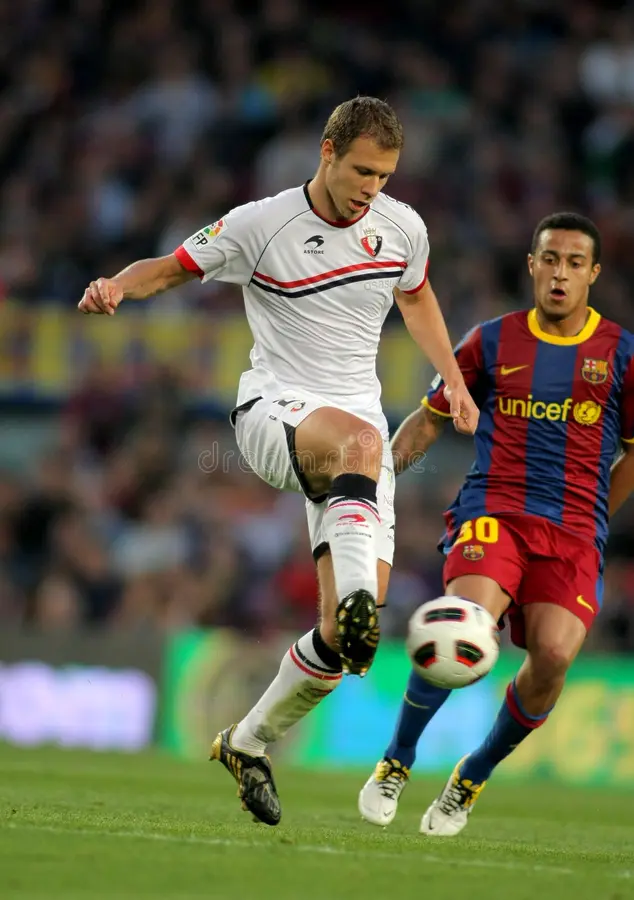
It was definitely a huge step in my career. That was always my objective, because I knew that the Hungarian football level was not that high compared with football in Western Europe. I realized that from the first moment when I joined Auxerre, even though I mostly participated with the second team, it was more professional, there was more competition and there was a big difference in the speed and the intensity of the play. I knew making this change would help me progress, get more experience and become a better player overall. This experience gave me really good ‘fuel’ for my entire career.
"I knew making this change would help me progress, get more experience and become a better player overall"
[ As your career has progressed, you’ve played for 18 clubs in 14 countries - was this something you were actively trying to do? ]
No, no, definitely not. I was just fulfilling my contract and then, thinking about if it's worth it to continue.
From the club side, the club has to be satisfied with you as a player just like you need to be about the club’s situation. I always think that if the football is okay, there is room for progression and there are real objectives, then it’s no problem to continue, even if the season was a setback or the squad needs to be rebuilt.
It’s hard to describe but sometimes you also get the feeling that it’s time to move on and take the next step.
A few times this happens late in the transfer window or the season - for example, in India, I was just there for a short time, or when I signed for Odense in Denmark, it was already almost October. So, sometimes the timing dictates things as well. In this case, I just need to keep playing, and in the next transfer window, we’ll sit down and evaluate the situation of the club or my situation within the squad.
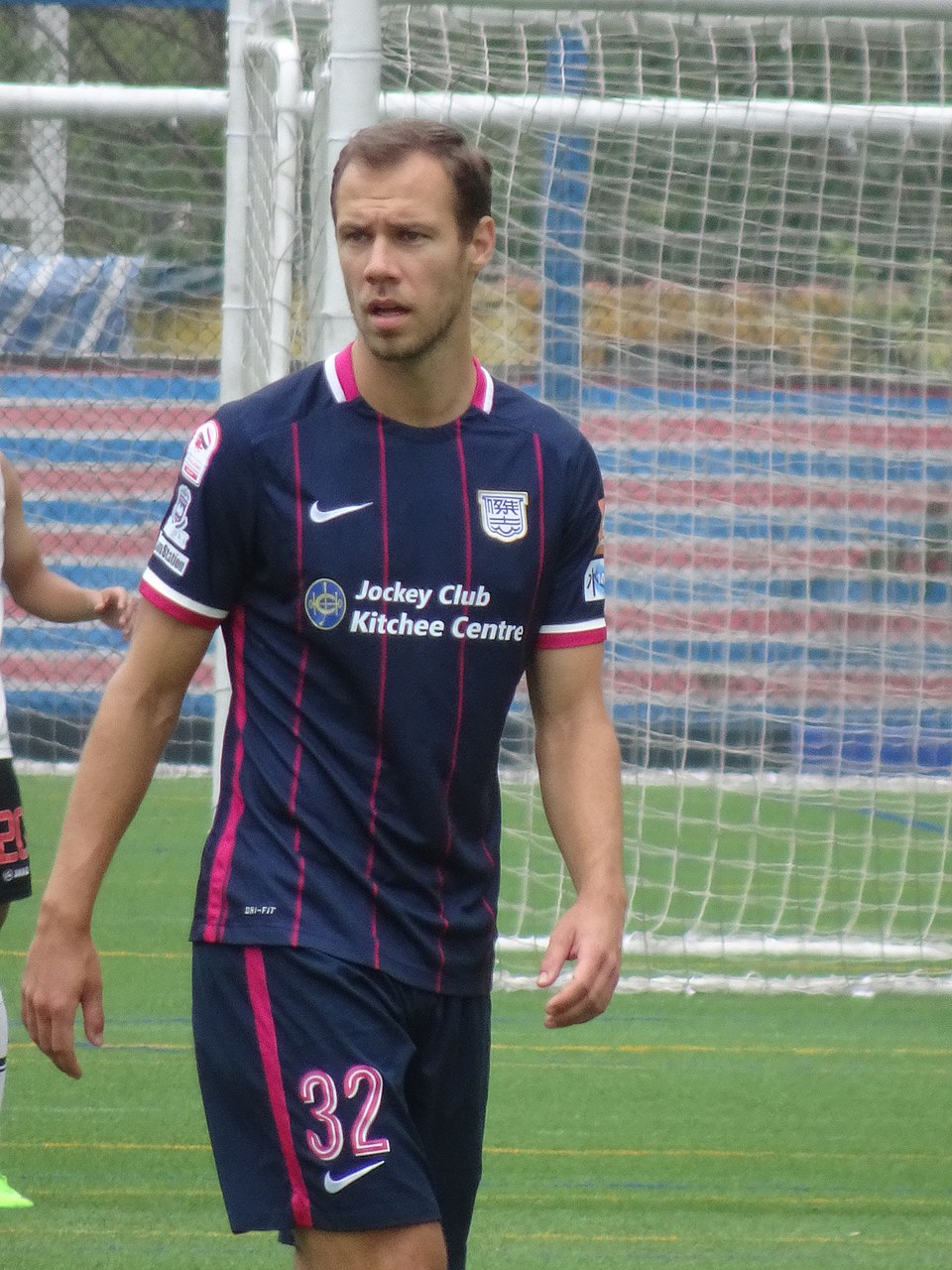
But also, along the way, in some way - as a human being - I evolved with all the experiences. To play in Australia, India, Hong Kong, Uruguay and many parts of Europe - I’m lucky.
[ When you are approached to play in a new country, how do you try to prepare or learn about the football there before you arrive? Do you try to find out about the league or the players? ]
When I went to France - and really every time I go to a new country - I imagine something, but day by day the reality goes by, and you don’t think too much about what you thought before or if it’s ‘shocking’ or not.
Every team and club and country had different difficulties or something to overcome. I am lucky enough, when I arrive on the first day, someone takes care of me and helps me settle down so I can just go to training and focus on giving back through football - because that's why they sent me the ticket to come in the first place!
Of course, some of the leagues are more different.
In India, there was a different format and the Super League had just launched. In Denmark and Scandinavia, it’s always a bit different in terms of living conditions - in the winter, you can only see the sun on the screen but not outside. Or, in Australia, you can be doing a regeneration cold bath in the ocean and one of your teammates tells you, ‘hey, watch out, on your towel is a small black spider - if it bites you, you’re done!’ In Uruguay, so many talented players are dreaming of playing in Europe.
To see the different cultures, what they are thinking about, what circumstances they have, it’s something else and it gives you a lot of good feelings because you have only one life and see what you see and what you experience.
I think I’ve broken the monotony in my life many times.
"it gives you a lot of good feelings because you have only one life and see what you see and what you experience"
[ Do you try to learn the language or get involved in more cultural things outside of just football in the countries you play in? ]
So normally, yeah, you should try to learn the language. Of course, now I’m in Germany, and I don’t speak German, and my everyday interactions are in English. Sometimes it reminds you how isolated you are or what situation you’re in. But, as a football player, you often have this advantage that the local people try to help you and make you feel at home beyond what is ‘normal’.
I spent 3 years in Spain and then added almost 2 years in Uruguay. At the end of the Uruguayan adventure, I had much more Spanish than before. I had some French, but it’s not there anymore because I was very young and it was only a year and a half. I was perhaps not too diligent then and also because of my frequent changing around.
In terms of participating in some local cultural things - not as much as I wanted to. I was always focusing on being a real professional and how to present myself as a football player, so I couldn’t spend much time participating in local fiestas or these kinds of things.
I would say I have to go back to many of the places where I have lived as a ‘normal guy’ and enjoy more of what these places have to offer.
[ ‘Never go back’ is a pretty famous remark in football (even though it happens all the time), you’ve gone back to several of your past clubs in Nijmegen, Hong Kong and of course in Budapest - what is this feeling like? ]
Going back is not as fun as a new place because going to a place for the first time, it’s very exciting. You don’t know what’s happening and you have to convince the people that you are the right choice and impress them.
If you go back, they already know you. Of course, if they phoned me a second - or third - time, it means they were satisfied by the previous occasions. And it’s good to be back and be back ‘officially’, not only as a tourist.
All the places I went back to, it was a good feeling. Of course, Honvéd, my home club, is always unique. Then, going back to Hong Kong - I loved playing there, we had a really good team with lots of foreigners from Brazil and Spain, so it was very unique and international. And then, Nijmegen, the first time, we had a very good season, and the second time, we almost managed to reach the same heights.
So, it’s good to see some good friends again and there is always the possibility to go back or stay there but it was an unusual move from myself because normally, I was always looking to move to new places and new cultures. Part of my philosophy is that I can play here and there, I can become a more complete player and a better player overall.
Of course, when you are a kid, and you are dreaming, you are dreaming about the top leagues like Spain and England. If you can play, I don’t know, 20 years in Spain or England, you are amongst the best footballers in the world but others, we just have a taste of the top of the top and then we go where we get the chance.
[ You’ve played at the highest levels with amazing, world famous players and coaches - what keeps you motivated to keep playing in smaller, less prestigious competitions - and maybe especially, now in the Landesliga in Berlin? ]
When you're playing in front of, I don't know, 40,000 or 60,000 people, and you play for your country, or in La Liga, or in the Copa Libertadores in South America, it’s something else. Not everyone can experience this, and it’s a huge privilege.
Compared to playing here in Germany in a lower league and there are problems with the kunstrasen and the ball is not there and the VAR is not working - it’s different. But what is still the same? For me at least, I love playing football and wherever I go and play, I put my name on my performance. I don’t like to play just for fun.
Of course, playing at a higher level is always more fun but they count the goals, it’s still sport and you’re competing against your opponents. Football is a huge love for a lot of people and it’s much better than just running alone in the park and trying to motivate yourself every 100 meters.
If I’m playing a match, I totally switch off from the outside world - it doesn’t exist for me while I’m playing. The objective is always to win matches and put your team as high as possible in the table. And then, in the offseason, plan your next move - I still believe there is a higher level in me and I’m going after it - we will see.
"I love playing football and wherever I go and play, I put my name on my performance. I don’t like to play just for fun"
[ Do your teammates now treat you differently because of your career? ]
Yes, they treat me differently. They’ll see, I don’t know images and YouTube videos. But it’s also because I’ve had more time, my career is over 20 years long!
In some ways, it’s very good when you arrive and you don’t have to discuss why they should listen to me because they can immediately see a big difference. Then it’s easier for me to influence my teammates in a positive way. I want to help show them how the real pro world is, but I also have to show everyone why I was there and what I learned there. This circle is always going, and I’ve also learned from many other players.
So I have a lot of things to teach and show, but it's not easy. That’s why, for example, when Lothar Matthäus was our national team coach, I can imagine he faced the same difficulties. He’s a World Cup winner and a Ballon d’Or winner and he’s trying to tell us something, but we’re coming from a lower level. I’m a little sorry for all these big coaches! José Antonio Camacho, Spanish national team coach and Real Madrid legend or Diego Forlán - he scored 300 goals in his career and we’ve barely played 300 matches, so it’s a different level.
[ Seems like you plan to keep playing for a while longer still, but have you thought about your post-playing career? Will you stay in football? ]
Yeah, actually, they're saying, I am good at explaining things - even if you don't see it in interviews! - in interviews, we’re just touching the surface, but everyday interactions are more important.
So, I do have some feeling that becoming a coach would suit me and be a good continuation of my football life. My objective is to do the licenses and eventually to work as a head coach, but of course, it will be interesting to see how I’ll get there, if I’ll start with youngsters, or as an assistant coach.
In the next few years, I’ll have to start my badges and then start - I hope I won’t start as a very old coach, because normally coaches start when they are 35 or so! But I’m still pushing my football career as a player.
In maybe one or two years, I’ll have to make a very painful decision, but I still enjoy being a football player, and it’s a unique thing - and once you stop, it’s gone forever. So, it will be tough to make the decision, but definitely, I want to become a good coach.